Every night, while the body enters its deepest repair cycles, the skin and underlying tissues begin a quiet but intensive process of renewal. Collagen fibres are rebuilt, inflammatory signals are cleared, and cellular machinery works to undo the oxidative damage accumulated throughout the day. The question for anyone serious about recovery is simple: what can you do to support that process more intelligently?
GHK-Cu 100mg — Glycyl-L-Histidyl-L-Lysine Copper — is a bioactive tripeptide that occurs naturally in human plasma, saliva, and urine. First identified in 1973, it has since become one of the most extensively studied molecules in skin biology and regenerative science. At a 100mg research dose, it represents a serious tool for those looking to understand and support the body's nightly regenerative capacity at a molecular level.
What Is GHK-Cu and Why Does It Matter for Recovery?
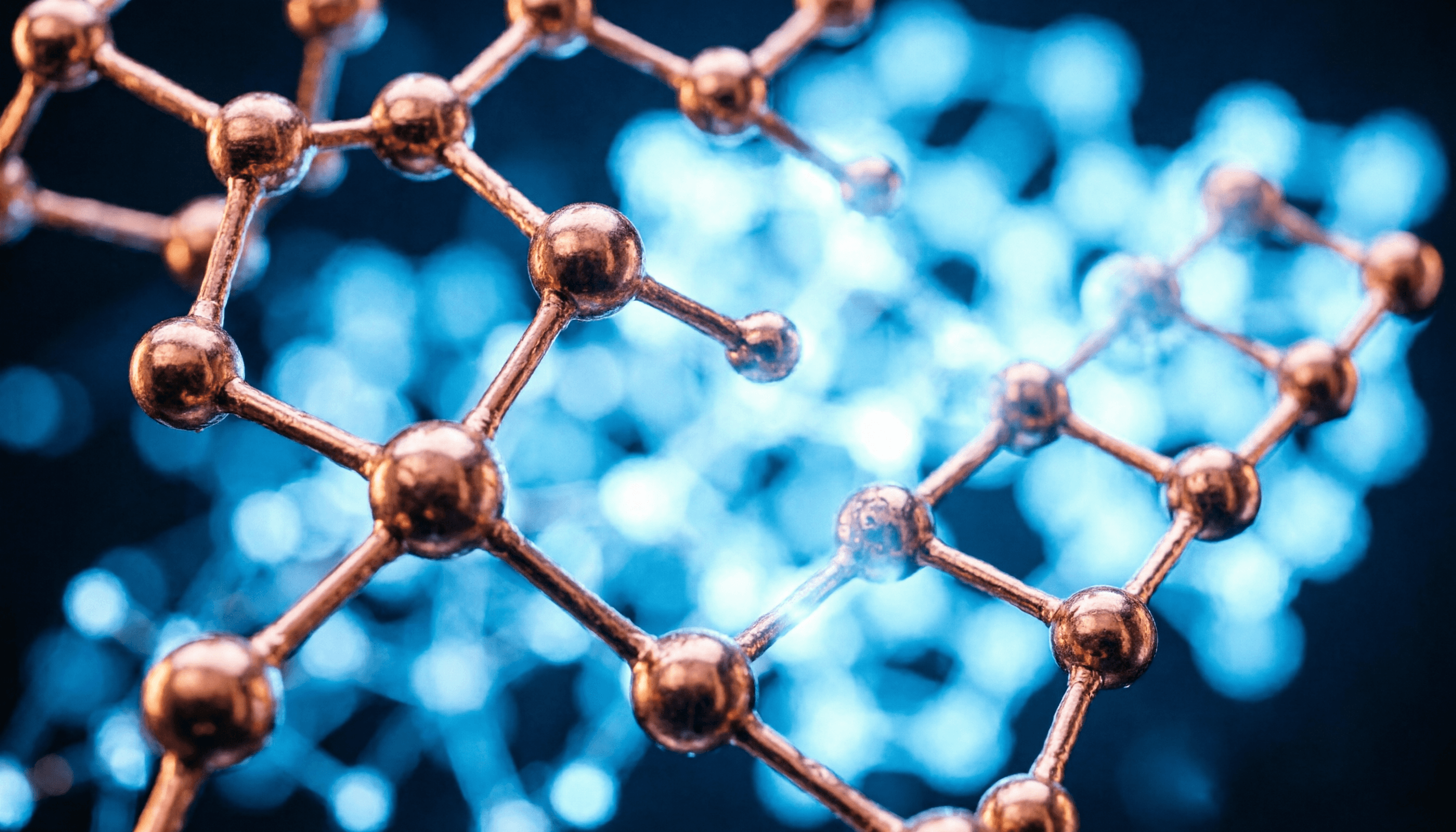
GHK-Cu is a tripeptide — three amino acids (glycine, histidine, lysine) bound to a copper ion. That copper component is not incidental. Copper is a cofactor for enzymes involved in collagen cross-linking, antioxidant defence, and tissue remodelling. By delivering copper in this bioavailable, peptide-bound form, GHK-Cu can interact with cellular receptors and gene expression pathways in ways that free copper cannot.
What makes this molecule particularly relevant to evening recovery is its documented involvement in tissue repair signalling. Research suggests GHK-Cu modulates a broad range of genes associated with inflammation control, extracellular matrix production, and cellular regeneration — processes that are most active during sleep. It is not a sedative or a hormone; it is a biological signal that helps the body do what it already does, only more efficiently.
GHK-Cu 100mg and Collagen Synthesis: The Structural Foundation
Collagen is the most abundant protein in the human body, and its gradual degradation with age is one of the primary drivers of visible skin ageing and slower tissue recovery. GHK-Cu has been shown in studies to stimulate the synthesis of collagen, elastin, and glycosaminoglycans — the structural proteins and compounds that give skin its density, firmness, and resilience.
This is not a surface-level cosmetic effect. Collagen synthesis is a metabolically expensive process that requires coordinated enzymatic activity, and GHK-Cu appears to upregulate the relevant pathways. For research contexts, the 100mg format of GHK-Cu provides a meaningful quantity for systematic investigation of these mechanisms.
Beyond Skin: Structural Protein Support Across Tissues
The regenerative activity of GHK-Cu is not confined to skin. The same collagen and elastin synthesis pathways that benefit the dermis are also relevant to connective tissue, blood vessel walls, and wound healing sites. This broader tissue relevance makes GHK-Cu a peptide of interest well beyond cosmetic applications.
Antioxidant and Anti-Inflammatory Properties of GHK-Cu
Oxidative stress is one of the key mechanisms through which ageing and physical exertion damage cells. Free radicals generated during metabolic activity and environmental exposure accumulate in tissues, disrupting cellular function and slowing repair. GHK-Cu exhibits strong antioxidant properties, helping to neutralise these reactive species and reduce the cellular burden carried into each night's recovery window.
Alongside this, the peptide demonstrates anti-inflammatory activity — modulating the signalling cascades that, when left unchecked, can shift from protective acute inflammation into chronic low-grade tissue damage. For anyone whose recovery routine is disrupted by persistent inflammation, this dual action is worth noting carefully.
Gene Regulation: The Deeper Science Behind GHK-Cu 100mg
One of the most compelling aspects of GHK-Cu research is its apparent influence on gene expression. Studies suggest it can modulate hundreds of genes involved in tissue repair, immune function, and cellular regeneration. This positions it not merely as a substrate for enzymatic reactions, but as a signalling molecule capable of shifting the body's transcriptional priorities toward repair and renewal.
This gene-regulatory dimension is part of what makes GHK-Cu 100mg interesting to researchers studying longevity and systemic regeneration, not just skin health. The molecule appears to communicate a kind of biological priority — one that aligns remarkably well with the body's natural nocturnal repair agenda.
How GHK-Cu Fits Into an Evening Recovery Protocol
An effective evening recovery routine works on multiple layers: reducing oxidative damage, supporting structural protein synthesis, managing inflammation, and promoting deep tissue repair. GHK-Cu addresses several of these simultaneously, which is what distinguishes it from more narrowly targeted compounds.
For those building a more comprehensive protocol, it is worth noting that GLOW 140mg incorporates GHK-Cu 100mg as its primary active component alongside BPC-157 and TB-500 in a single ready-to-use pen — a formulation designed to combine the aesthetic regenerative effects of GHK-Cu with the structural tissue recovery properties of the other two peptides. This combination approach may be of interest to researchers examining synergistic regenerative mechanisms.
Key Properties That Make GHK-Cu Central to Skin and Recovery Research
- Collagen and elastin stimulation: Supports structural protein synthesis essential for skin density and tissue integrity.
- Antioxidant activity: Helps neutralise free radicals and reduce oxidative stress at the cellular level.
- Anti-inflammatory signalling: Modulates inflammatory pathways to support a cleaner recovery environment.
- Gene expression modulation: Influences a wide range of genes associated with tissue repair, immune function, and cellular renewal.
- Natural bioavailability: As a molecule that occurs naturally in human plasma, GHK-Cu is well-recognised by biological systems.
- Wound healing support: Research indicates a role in accelerating healing processes following tissue damage.
- Hair and scalp research: GHK-Cu is also studied for its potential role in stimulating hair follicle activity and supporting scalp health.
Supporting the Protocol: A Note on Complementary Peptides
While GHK-Cu 100mg stands on its own as a research-grade regenerative compound, some protocols pair it with peptides that address adjacent aspects of nighttime recovery. Epitalon 20mg is one such example — a tetrapeptide associated with telomerase activity, circadian rhythm normalisation, and melatonin regulation, making it relevant to those investigating the intersection of sleep quality and cellular longevity. Where GHK-Cu addresses the structural and oxidative dimensions of overnight repair, Epitalon speaks to the deeper biological clock that governs when and how efficiently that repair occurs.
These are distinct molecules with distinct mechanisms, and their potential complementarity is a matter for careful research design rather than casual stacking. The point is that a well-considered evening recovery strategy may benefit from understanding both.
Research Format and Availability at Olympus Meds
The GHK-Cu 100mg available through Olympus Meds is formulated for research purposes at a serious dose. The 100mg quantity allows for extended investigation of dosing variables, timing protocols, and combination approaches without the need for frequent reordering.
For institutions, independent researchers, or advanced users requiring larger quantities, Olympus Meds offers a dedicated bulk ordering option — a practical solution when working with peptides at scale. You can also review the current product availability and stock status before placing an order to ensure your protocol is not interrupted.
Where to Source GHK-Cu 100mg for Your Research
If you are building a structured evening recovery or skin regeneration research protocol, GHK-Cu 100mg from Olympus Meds is the logical starting point. It is the primary active compound in one of the most studied copper peptide systems in modern regenerative biology, and the 100mg format provides the volume needed for meaningful, repeatable research work.
For those exploring multi-compound approaches, the GLOW 140mg pen offers GHK-Cu as the dominant component in a pre-formulated recovery blend. And for bulk research requirements, the Olympus Meds bulk page provides a streamlined path to larger quantities. Check current stock availability and explore the full peptide catalogue to build a protocol grounded in science, not guesswork.
Is GHK-Cu 100mg suitable for use in evening recovery research protocols?
GHK-Cu 100mg is well-suited to research contexts focused on skin regeneration, tissue repair, and antioxidant defence — all processes that are physiologically active during sleep. Its documented involvement in collagen synthesis, gene regulation, and inflammatory modulation makes it a relevant compound for studying overnight recovery mechanisms. It is intended for research purposes and should be approached accordingly.
How does GHK-Cu differ from other regenerative peptides like BPC-157 or TB-500?
GHK-Cu operates primarily through copper-dependent enzymatic pathways, collagen and elastin synthesis, and broad gene expression modulation — with a strong focus on skin and extracellular matrix health. BPC-157 and TB-500, by contrast, are more closely associated with soft tissue repair, angiogenesis, and systemic cellular mobility. The three peptides address overlapping but distinct aspects of recovery, which is why they are sometimes studied in combination, as seen in the GLOW 140mg formulation.
Can GHK-Cu 100mg be ordered in bulk for extended research programmes?
Yes. Olympus Meds supports larger-scale research needs through its bulk ordering facility. This is particularly useful for protocols requiring consistent supply over multiple weeks or months. It is recommended to check the stock and availability page in advance to plan your research timeline without interruption.