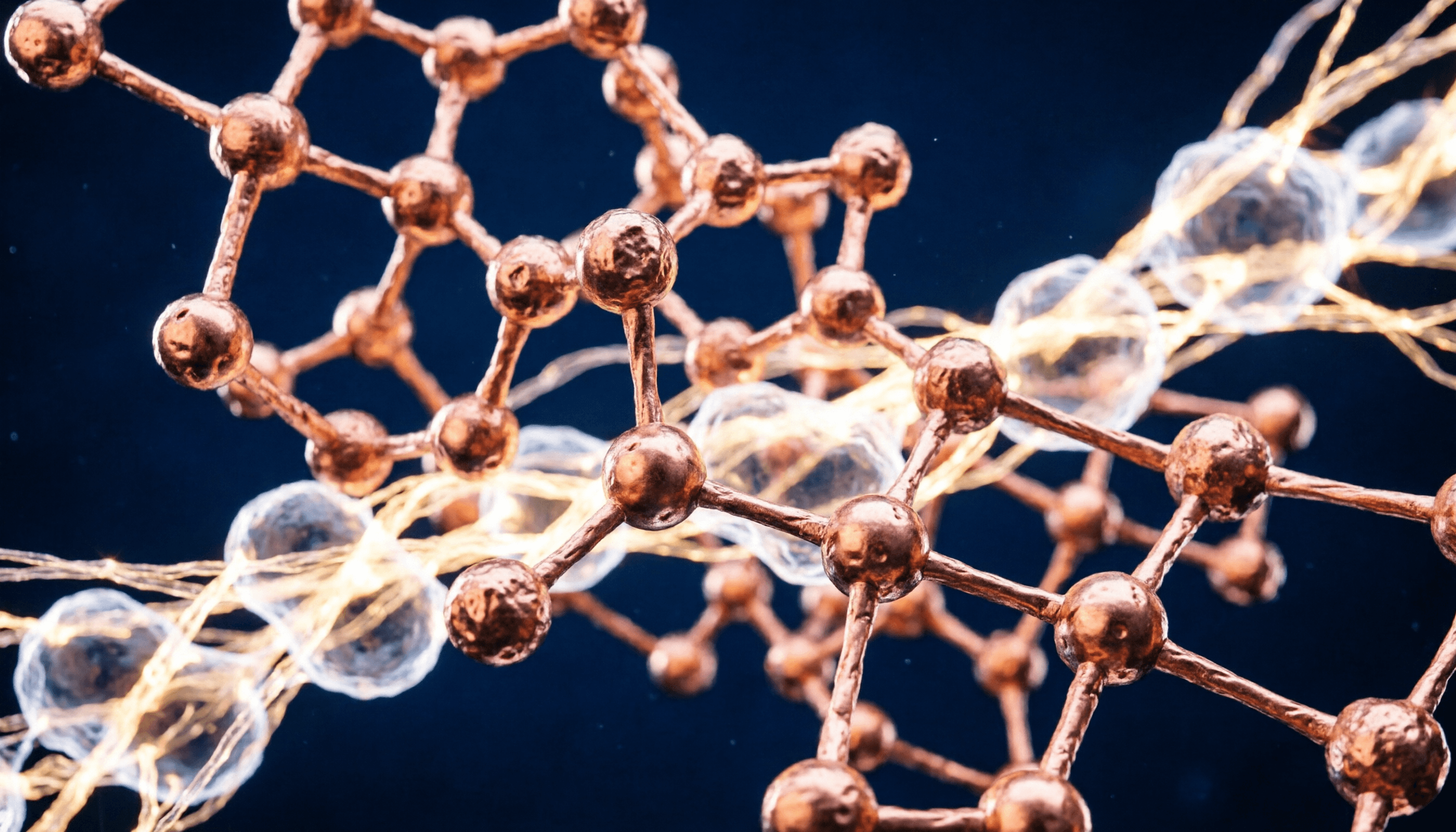
Among the most studied bioactive molecules in modern regenerative science, GHK-Cu 100mg occupies a genuinely distinctive position. First identified in 1973, this small copper-bound tripeptide — Glycyl-L-Histidyl-L-Lysine complexed with a copper ion — occurs naturally in human plasma, saliva, and urine. Far from being a laboratory novelty, it is a molecule the body already knows and uses as part of its own regenerative architecture.
What makes GHK-Cu particularly compelling for longevity-minded researchers and clinicians is the breadth of its biological activity. It does not act through a single narrow pathway. Instead, it influences collagen and elastin synthesis, antioxidant defense, inflammatory regulation, and gene expression simultaneously — making it one of the most multi-dimensional peptides currently available for research into skin integrity, tissue repair, and cellular resilience.
What GHK-Cu 100mg Is and Why It Matters
GHK-Cu is a tripeptide composed of three amino acids — glycine, histidine, and lysine — chelated to a copper ion. This copper-peptide complex is not simply a delivery vehicle for copper. The bond itself confers unique biological properties that neither the peptide nor the mineral exhibits alone. The result is a molecule with exceptional affinity for damaged or stressed tissue.
At 100mg per unit, the GHK-Cu 100mg format available at Olympus Meds is well suited for sustained research applications where consistent dosing and high-purity material are non-negotiable. Its natural origin and established research profile make it one of the more accessible starting points in advanced peptide investigation.
The Science Behind GHK-Cu and Collagen Synthesis
One of GHK-Cu's most well-documented roles is its capacity to stimulate the synthesis of collagen — the structural protein responsible for skin firmness, joint integrity, and connective tissue resilience. As the body ages, collagen production declines, and the scaffolding that holds tissues together becomes progressively weaker. GHK-Cu engages directly with this process by upregulating fibroblast activity and promoting the formation of new collagen fibers.
Beyond collagen, the peptide also supports elastin synthesis and the production of glycosaminoglycans — components that contribute to skin density, hydration, and elasticity. Research suggests that these combined effects may translate into measurable improvements in skin texture, a reduction in fine lines, and enhanced structural integrity of soft tissue following damage or stress.
Gene Regulation and Cellular Signaling
What elevates GHK-Cu beyond a simple collagen booster is its capacity to modulate gene expression. Studies indicate it may regulate hundreds of genes associated with tissue repair, immune response, and cellular regeneration. This positions it not merely as a topical or cosmetic agent, but as a molecule with meaningful systemic research potential in the context of longevity science.
Antioxidant and Anti-Inflammatory Properties of GHK-Cu 100mg
Oxidative stress is one of the primary drivers of cellular aging and tissue degradation. GHK-Cu exhibits strong antioxidant activity, helping to neutralize free radicals and protect cells from the cumulative damage that accelerates aging at the molecular level. This makes it particularly relevant for recovery-focused research, where the goal is not only to repair existing damage but to create a more resilient cellular environment going forward.
Its anti-inflammatory properties complement this protective function. By helping to modulate inflammatory signaling, GHK-Cu may support faster and cleaner healing processes — reducing the period in which damaged tissue is vulnerable to secondary injury or chronic low-grade inflammation. For longevity researchers, this dual action represents one of the peptide's most compelling attributes.
Key Research Applications of GHK-Cu
- Skin regeneration and elasticity: Stimulation of collagen and elastin synthesis to support skin density and reduce visible signs of aging.
- Wound healing: Accelerated tissue repair through fibroblast activation and improved cellular communication in damaged areas.
- Hair follicle support: Preliminary research suggests GHK-Cu may stimulate hair growth by improving scalp tissue environment and follicle signaling.
- Antioxidant defense: Protection of cells from oxidative stress, particularly relevant in high-demand recovery contexts.
- Anti-inflammatory modulation: Reduction of inflammatory markers that can impede recovery and accelerate tissue degradation.
- Gene expression regulation: Influence over a broad array of genes linked to immune function, repair, and cellular maintenance.
- Connective tissue integrity: Support for the structural proteins underpinning muscles, tendons, and skin.
GHK-Cu 100mg Within a Broader Longevity Protocol
GHK-Cu does not exist in isolation within the landscape of research peptides, and its benefits can be meaningfully contextualized alongside other compounds that address complementary aspects of cellular health. One such molecule is NAD+, a coenzyme central to mitochondrial energy production and DNA maintenance. NAD+ levels decline with age, and its relationship with cellular resilience makes it a natural companion in longevity-focused research frameworks where GHK-Cu addresses structural repair and NAD+ addresses metabolic energy.
For researchers exploring recovery from a broader systemic angle, BPC-157 offers complementary soft tissue support — particularly around muscles, tendons, and the gastrointestinal barrier. While GHK-Cu works at the level of gene expression, collagen scaffolding, and antioxidant protection, BPC-157 contributes through angiogenesis and localized tissue stabilization. Together, they represent two different but reinforcing approaches to the same underlying goal: a body that recovers faster, ages more gracefully, and maintains structural integrity under stress.
Why GHK-Cu Remains Central
Despite the richness of the peptide landscape, GHK-Cu 100mg retains a uniquely central role because of its multi-system reach. Most peptides act through one or two defined pathways. GHK-Cu acts across collagen synthesis, gene regulation, oxidative defense, and inflammatory control simultaneously — a combination that is difficult to replicate with any single alternative compound.
Quality, Purity, and Research Standards
For research applications, the integrity of the peptide material is non-negotiable. Olympus Meds provides GHK-Cu 100mg as a high-purity research compound, formulated to meet the demands of serious investigators working within structured protocols. Researchers who require transparency around product specifications and compliance standards can review available documentation through the Olympus Meds status and verification page.
Consistency matters in longitudinal research. A compound that varies in purity or potency between batches introduces confounding variables that undermine data integrity. The 100mg format is designed to support extended research timelines without requiring frequent reordering, and the compound's established stability profile makes it well suited to controlled storage environments.
Where to Source GHK-Cu 100mg for Research
Researchers and institutions working at scale will find the Olympus Meds bulk ordering page a practical resource. Bulk access allows for cost-efficient procurement of GHK-Cu 100mg without compromising on the quality standards that serious research demands. Whether the protocol involves short-term investigation or a multi-phase longitudinal study, the ability to source consistently from a single reliable supplier reduces logistical friction and ensures batch-to-batch continuity.
For individual researchers or those beginning a new investigative program, the standard GHK-Cu 100mg product page provides full compositional detail and ordering options. Olympus Meds is built around the principle that premium research compounds should be accessible without compromising on credibility or transparency.
Final Perspective: GHK-Cu as a Cornerstone of Cellular Resilience Research
The longevity science conversation has expanded dramatically in recent years, but GHK-Cu has remained a constant — not because it is fashionable, but because the data consistently supports its relevance. A peptide that was first characterized over fifty years ago and continues to generate meaningful research interest is one that has earned its place on the basis of biological reality rather than marketing momentum.
For those building serious research frameworks around tissue repair, skin biology, antioxidant defense, or the cellular mechanisms of aging, GHK-Cu 100mg from Olympus Meds represents a well-evidenced, high-purity starting point. Explore the full catalog, review the product status page for compliance and availability details, and consider the bulk options if your research demands volume and consistency.
Frequently Asked Questions
What makes GHK-Cu different from other collagen-supporting peptides?
Most collagen-supporting compounds work through a single mechanism — typically by providing substrate amino acids or stimulating one specific growth factor. GHK-Cu is distinctive because it acts across multiple biological pathways simultaneously: it stimulates collagen and elastin synthesis, modulates gene expression related to tissue repair, provides antioxidant protection, and helps regulate inflammation. This multi-system reach makes it one of the most comprehensively studied peptides in regenerative science.
Can GHK-Cu 100mg be used alongside other peptides in a research protocol?
GHK-Cu is frequently studied in the context of broader recovery and longevity protocols. Its mechanisms are distinct enough from compounds like NAD+ or BPC-157 that they are generally considered complementary rather than redundant. As with any multi-peptide research design, protocol structure should be guided by the specific research objectives and an understanding of each compound's individual mechanism of action.
Why is the 100mg format significant for research purposes?
The 100mg unit size provides a meaningful quantity for structured research applications, supporting extended protocols without the logistical burden of frequent reordering. It also allows for more flexible dosing design across different phases of a study. For larger-scale or institutional research needs, the Olympus Meds bulk page offers additional volume options tailored to higher-demand environments.