Why Hormonal Balance Is the Hidden Variable in Recovery
When most people think about joint comfort and soft-tissue recovery, they focus on the obvious candidates — peptides targeting collagen, tendons, or inflammation. What often goes unaddressed is the hormonal environment in which all of that repair happens. Endocrine balance is not a secondary concern; it is the foundation that determines how efficiently the body can mobilize, repair, and adapt.
HCG (Human Chorionic Gonadotropin) occupies a unique position in this picture. As a well-researched glycoprotein hormone with deep roots in endocrine science, HCG supports the signaling axis between the pituitary gland and the gonads — a pathway that has far-reaching consequences for tissue health, energy regulation, and the body's overall capacity for recovery.
What Is HCG and Why Does It Matter in Endocrine Science
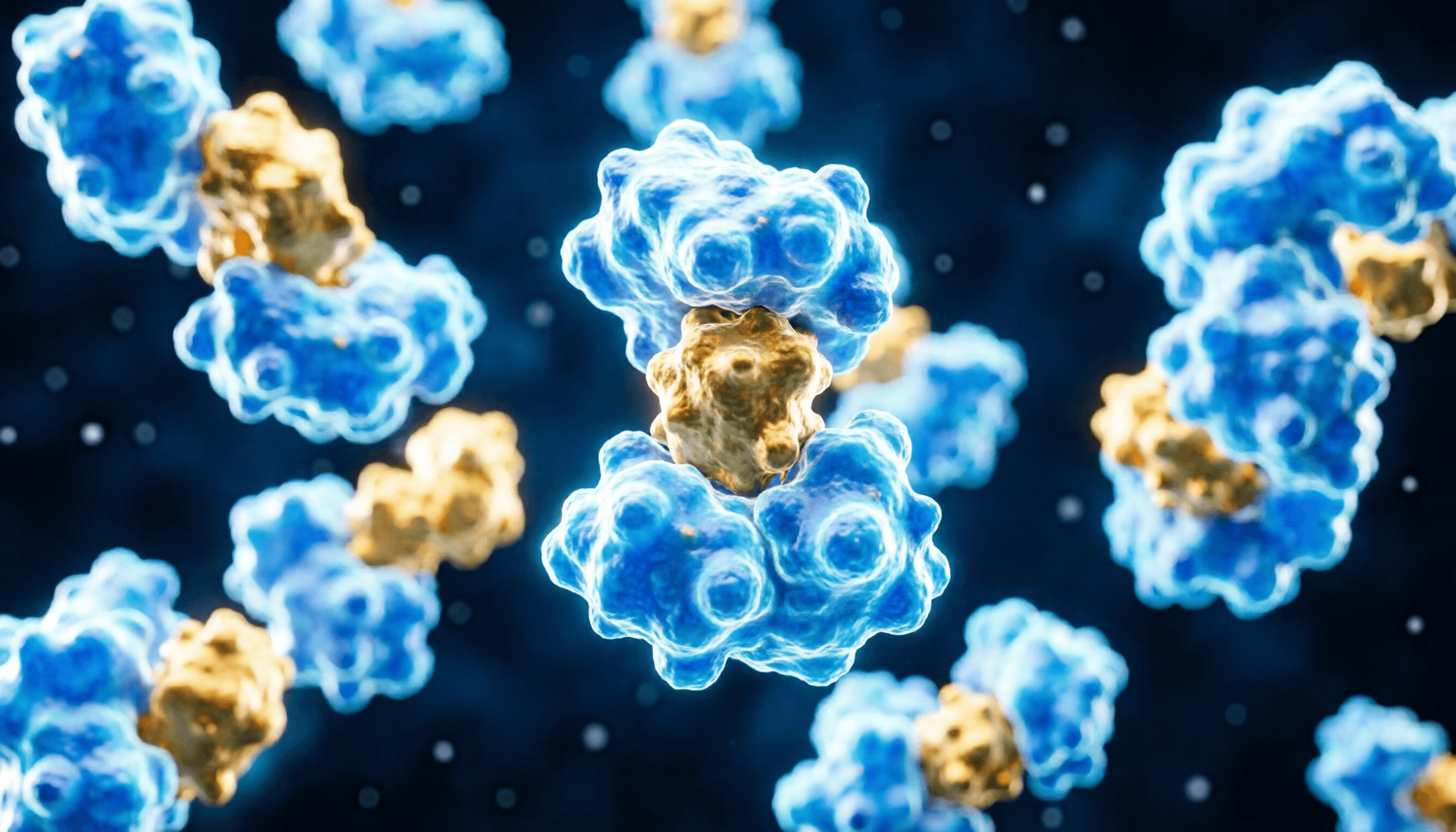
HCG is a glycoprotein hormone composed of alpha and beta subunits, structurally related to the pituitary gonadotropins LH (luteinizing hormone) and FSH (follicle-stimulating hormone). Its influence on the reproductive hormonal axis has made it one of the most studied hormones in modern endocrinology. At 5000 IU per unit, it is formulated at a concentration that reflects its established role in clinical and research contexts.
What makes HCG particularly significant is its role in pituitary-gonadal communication. It acts as a messenger that keeps the hormonal dialogue between the brain and the gonads active and coherent. When that dialogue is disrupted — through stress, age, or external hormonal influence — the downstream effects on tissue quality, inflammation management, and physical resilience can be substantial.
The Pituitary-Gonadal Axis and Physical Resilience
The pituitary-gonadal axis governs the production of key anabolic and regulatory hormones. When this axis is well-supported, the body tends to maintain a more favorable environment for tissue repair and musculoskeletal health. Hormonal disruption, by contrast, can manifest as slower recovery, reduced tissue elasticity, and diminished tolerance to physical stress — all of which are directly relevant to joint and soft-tissue outcomes.
HCG as a Classic, Evidence-Backed Hormonal Tool
HCG is not a newcomer in endocrine science. It has been studied extensively across reproductive medicine, endocrinology, and metabolic research for decades. This depth of research is one of the reasons it continues to hold a respected place in modern wellness and recovery protocols — not as a trend molecule, but as a foundational endocrine tool with a well-understood mechanism.
Its glycoprotein structure gives it biological stability and receptor specificity that smaller peptides cannot replicate. For individuals navigating hormonal recovery, post-cycle endocrine restoration, or simply seeking to maintain optimal hormonal signaling, HCG provides a clinically grounded option backed by generations of scientific inquiry.
How Hormonal Regulation Connects to Joint and Soft-Tissue Health
The connection between endocrine function and musculoskeletal health is increasingly well-documented. Gonadal hormones influence collagen synthesis rates, tendon stiffness, synovial fluid quality, and inflammatory signaling. A well-regulated hormonal environment does not just support reproductive function — it creates the biochemical conditions under which joints stay resilient and soft tissues recover efficiently.
This is why HCG belongs in a conversation about joint comfort and recovery routines. Supporting the hormonal axis is not an indirect or peripheral strategy; it is a first-principles approach to ensuring the body's repair machinery is operating with the right biochemical inputs.
Hormonal Environment and Collagen Dynamics
Collagen is the primary structural protein in tendons, ligaments, cartilage, and joint capsules. Its synthesis and degradation rates are sensitive to hormonal signals, particularly those mediated through the gonadal axis. When hormonal balance is compromised, collagen turnover can shift unfavorably — accelerating wear without adequate repair. Maintaining robust pituitary-gonadal signaling, as HCG supports, is one way to keep that balance in check.
Building a Layered Recovery Strategy Around HCG
A thoughtful recovery protocol considers multiple levels simultaneously: structural peptides for local tissue repair, systemic support for cellular communication, and hormonal regulation to ensure the underlying endocrine environment is conducive to healing. HCG addresses that third layer — the one that is most often overlooked yet most consequential for long-term physical resilience.
For individuals who are also focused on soft-tissue regeneration at a more local level, BPC-157 + TB-500 offers a well-regarded synergistic formula that targets tendons, ligaments, and connective tissue through complementary mechanisms. BPC-157 supports local regeneration and angiogenesis, while TB-500 works systemically to improve cellular mobility and tissue flexibility. Together with HCG's hormonal support, these peptides address recovery from multiple angles.
Those interested in a comprehensive skin and tissue approach may also consider GLOW 140mg, which combines GHK-Cu, BPC-157, and TB-500 in a single pen. Its focus on collagen synthesis and structural soft-tissue repair makes it a natural complement to a hormone-first recovery strategy.
Key Characteristics of HCG at a Glance
- Classification: Glycoprotein hormone (gonadotropin class)
- Composition: 5000 IU per unit
- Primary mechanism: Pituitary-gonadal axis signaling via LH receptor interaction
- Research depth: One of the most extensively studied hormones in endocrine science
- Primary use-case profile: Hormonal regulation, endocrine balance, reproductive axis support
- Structural distinction: Glycoprotein with alpha-beta subunit architecture, offering receptor specificity
- Relevance to recovery: Supports the hormonal environment underlying tissue repair, collagen dynamics, and physical resilience
Who Is HCG Most Relevant For
HCG is relevant for individuals who recognize that hormonal environment is a meaningful variable in their overall wellness and recovery strategy. This includes those managing endocrine balance as part of a broader health protocol, those in post-cycle hormonal restoration phases, and individuals who want to ensure their pituitary-gonadal axis remains active and well-supported during periods of physical demand.
It is also relevant for anyone who has noticed that recovery quality, joint comfort, or general physical resilience has declined in ways that cannot be fully explained by local tissue factors alone. In those cases, looking upstream at hormonal regulation — with a well-characterized tool like HCG — is a logical and scientifically grounded next step.
You can also review the current availability status of HCG and other products at Olympus Meds to plan your protocol without delays.
Where to Source HCG and Build Your Protocol
Olympus Meds offers HCG 5000 IU as part of a curated catalog of research-grade peptides and hormones designed for serious wellness and recovery applications. The product is clearly labeled, precisely dosed, and positioned within a broader ecosystem of complementary compounds — so you can build protocols with clarity and confidence.
If you are sourcing multiple compounds for a layered recovery or endocrine support strategy, the Olympus Meds bulk page is the most efficient starting point. It allows you to consolidate your order across the full catalog, ensuring your entire protocol is covered in a single, streamlined process.
At Olympus Meds, every product in the catalog is selected for scientific credibility, precise composition, and genuine relevance to modern wellness goals. Whether you are beginning with HCG as a hormonal foundation or adding it to an existing recovery stack, the platform gives you the tools to do so with precision.
Frequently Asked Questions About HCG
What makes HCG different from other peptides in the catalog?
HCG is not a peptide in the conventional sense — it is a glycoprotein hormone with a well-established role in endocrine science spanning decades of clinical and research use. Unlike most recovery peptides that act locally on tissues, HCG operates at the level of the pituitary-gonadal axis, influencing the hormonal environment that underpins broader physical health and resilience. Its 5000 IU composition reflects a research-validated concentration.
Can HCG be used alongside recovery-focused peptides?
HCG addresses hormonal regulation, while peptides like BPC-157 + TB-500 address local and systemic tissue repair. These mechanisms are distinct and non-competing, which means they can be considered as part of a layered strategy where each compound addresses a different level of the recovery equation. As always, individual protocols should be approached with appropriate research and professional guidance.
How do I check if HCG is currently in stock at Olympus Meds?
You can check real-time product availability directly on the Olympus Meds status page, which provides up-to-date information on stock across the entire catalog. This is the most reliable way to confirm availability before placing an order or planning a protocol timeline.