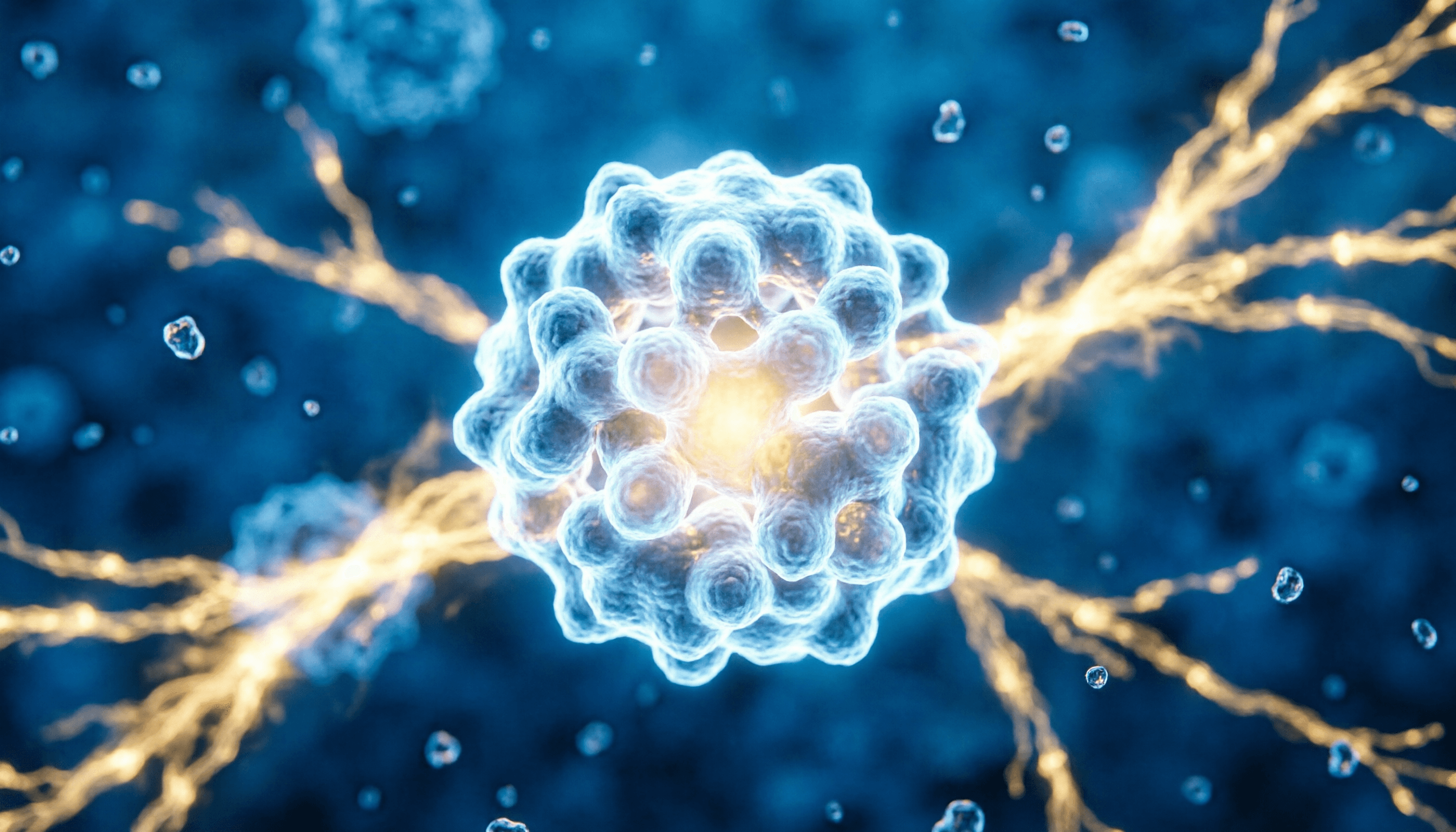
When training intensity climbs — longer blocks, heavier loads, shorter recovery windows — the body's hormonal environment comes under real pressure. Muscle retention during these demanding cycles is not simply a matter of eating enough protein. It depends, in large part, on whether the endocrine system can sustain the signalling that keeps anabolic processes running. That is precisely where HCG (Human Chorionic Gonadotropin) enters the conversation as a foundational tool in hormonal regulation.
HCG is a well-established glycoprotein hormone with decades of research behind it. Its primary mechanism involves supporting communication along the pituitary-gonadal axis — the same pathway that governs testosterone production and overall reproductive hormonal balance. For athletes and advanced training individuals, maintaining that axis during high-stress cycles is not a secondary concern. It is the difference between a productive training phase and one that quietly erodes the muscle you worked to build.
Why Hormonal Balance Matters for Muscle Retention
Muscle tissue is metabolically expensive. The body will reduce its commitment to maintaining it the moment the hormonal environment signals that resources are scarce or the system is under sustained stress. Suppressed gonadotropin signalling — whether from overtraining, caloric restriction, or extended use of exogenous hormones — directly compromises the downstream production of testosterone and other anabolic regulators.
The result is a catabolic drift: the gradual loss of lean tissue even when training volume remains high. Addressing this drift requires more than increasing calories or adjusting training variables. It requires restoring the hormonal signals at their source, which is exactly the function that HCG is designed to support.
What HCG Is and How It Works
HCG is a glycoprotein hormone composed of two subunits, available through Olympus Meds in a 5000 IU preparation. In endocrine science, it is recognised for its structural similarity to Luteinizing Hormone (LH), allowing it to bind to LH receptors and stimulate the gonads directly. This makes it uniquely positioned to support the pituitary-gonadal axis when that communication has been disrupted or suppressed.
By signalling at the gonadal level, HCG supports the maintenance of hormonal balance without requiring the full upstream cascade to be intact. This is what makes it particularly relevant during demanding training cycles, post-cycle phases, or periods where endocrine output has been compromised by sustained physiological stress.
Key Characteristics of HCG
- Composition: 5000 IU of Human Chorionic Gonadotropin per unit
- Mechanism: Binds to LH receptors, supporting gonadal stimulation and hormonal signalling
- Axis supported: Pituitary-gonadal communication pathway
- Research profile: One of the most extensively studied hormones in modern endocrine science
- Use-case profile: Hormonal restoration, endocrine maintenance during demanding cycles, post-cycle support
- Format: Lyophilised preparation requiring reconstitution before use
HCG in the Context of Demanding Training Cycles
Elite-level training cycles — whether focused on strength, hypertrophy, or body recomposition — place the endocrine system under sustained demand. The hypothalamic-pituitary-gonadal (HPG) axis is sensitive to both physical and caloric stress. Extended periods of suppression, even partial suppression, translate into reduced anabolic signalling and accelerated muscle catabolism.
HCG addresses this vulnerability by working directly at the gonadal level. Rather than relying on the full HPG cascade to remain intact, it provides a targeted signal that supports testosterone synthesis and maintains the hormonal environment necessary for muscle retention. For anyone running structured cycles or managing hormonal balance across a competitive season, this targeted approach is both logical and well-supported by decades of clinical research.
HCG Alongside Complementary Peptides
While HCG addresses the hormonal axis directly, some training strategies benefit from layering additional peptide support. PEG-MGF is one such option — a PEGylated form of Mechano Growth Factor that supports local recovery processes in muscle tissue following intense mechanical loading. It works at the cellular signalling level, complementing the systemic hormonal support that HCG provides.
Similarly, IGF-1 LR3 — a long-acting analog of Insulin-Like Growth Factor 1 — supports cellular growth and tissue adaptation, particularly during periods of high training volume. When the hormonal environment is stabilised by HCG, downstream growth factors like IGF-1 LR3 can operate more effectively. The logic is straightforward: restore the foundation first, then build on it.
Understanding the Endocrine Foundation of Muscle Retention
It is worth pausing to appreciate why the endocrine foundation matters so much in a muscle retention context. Testosterone, the primary anabolic androgen, does not exist in isolation. Its production is governed by LH signalling from the pituitary — the same signalling pathway that HCG mimics. When LH signalling drops, testosterone production drops. When testosterone drops, protein synthesis rates decline and the balance tips toward catabolism.
This is not a theoretical concern for advanced athletes. It is a documented physiological response to the kind of stress that demanding training cycles consistently impose. Supporting that LH-receptor pathway with HCG is therefore not a peripheral strategy — it is a direct intervention at the point where muscle retention is most vulnerable.
Who Benefits Most from HCG During Training
The profile of individuals who stand to benefit most from HCG in a training context is fairly well-defined. Those running extended hormonal cycles who need to maintain gonadal function represent the most obvious use case. Equally relevant are athletes in caloric deficit phases, where endocrine suppression is a common side effect of sustained energy restriction.
Individuals in post-cycle phases — seeking to restore natural hormonal output after a structured cycle — also find HCG central to their protocols. And for those managing age-related hormonal decline alongside an active training lifestyle, the 5000 IU preparation offers a well-researched, precisely dosed option for supporting the pituitary-gonadal axis at a meaningful level.
Where to Source HCG and Explore Bulk Options
Olympus Meds offers HCG in a 5000 IU preparation, formulated to the standards expected of a premium peptide and hormonal product line. Whether you are building a standalone hormonal support protocol or integrating HCG into a broader cycle management strategy, the product page provides full composition details and ordering options.
For those managing larger research or personal-use requirements across multiple compounds, the Olympus Meds bulk ordering page offers a practical route to consolidating your supply. Volume purchasing ensures consistency across a full training block without the risk of running short at a critical phase.
You can also review the current availability and status of all products, including HCG, via the Olympus Meds product status page — a useful reference point before placing any order.
Frequently Asked Questions About HCG and Muscle Retention
How does HCG specifically support muscle retention during training?
HCG supports muscle retention indirectly by maintaining the hormonal signalling environment that keeps anabolic processes active. By binding to LH receptors and stimulating gonadal activity, it helps preserve testosterone production during periods when the pituitary-gonadal axis may be suppressed. A stable hormonal environment is a prerequisite for effective protein synthesis and lean tissue maintenance.
Is HCG only relevant during post-cycle phases?
Post-cycle use is one of the most well-known applications, but HCG is also relevant during active cycles and periods of caloric restriction or overtraining stress. Any situation where LH-mediated gonadal signalling is compromised represents a potential use case for HCG as a hormonal support tool. Its 5000 IU preparation makes it adaptable across a range of protocol structures.
Can HCG be combined with other peptides in a training stack?
Yes. HCG addresses the hormonal axis, while peptides such as PEG-MGF and IGF-1 LR3 work at the level of local muscular recovery and cellular growth signalling. These mechanisms do not overlap, which means they can complement each other meaningfully within a structured protocol. Always approach any multi-compound strategy with a clear understanding of each product's mechanism and intended role.
Explore the full Olympus Meds peptide catalogue and build your protocol with confidence — starting with the endocrine foundation that makes everything else work.