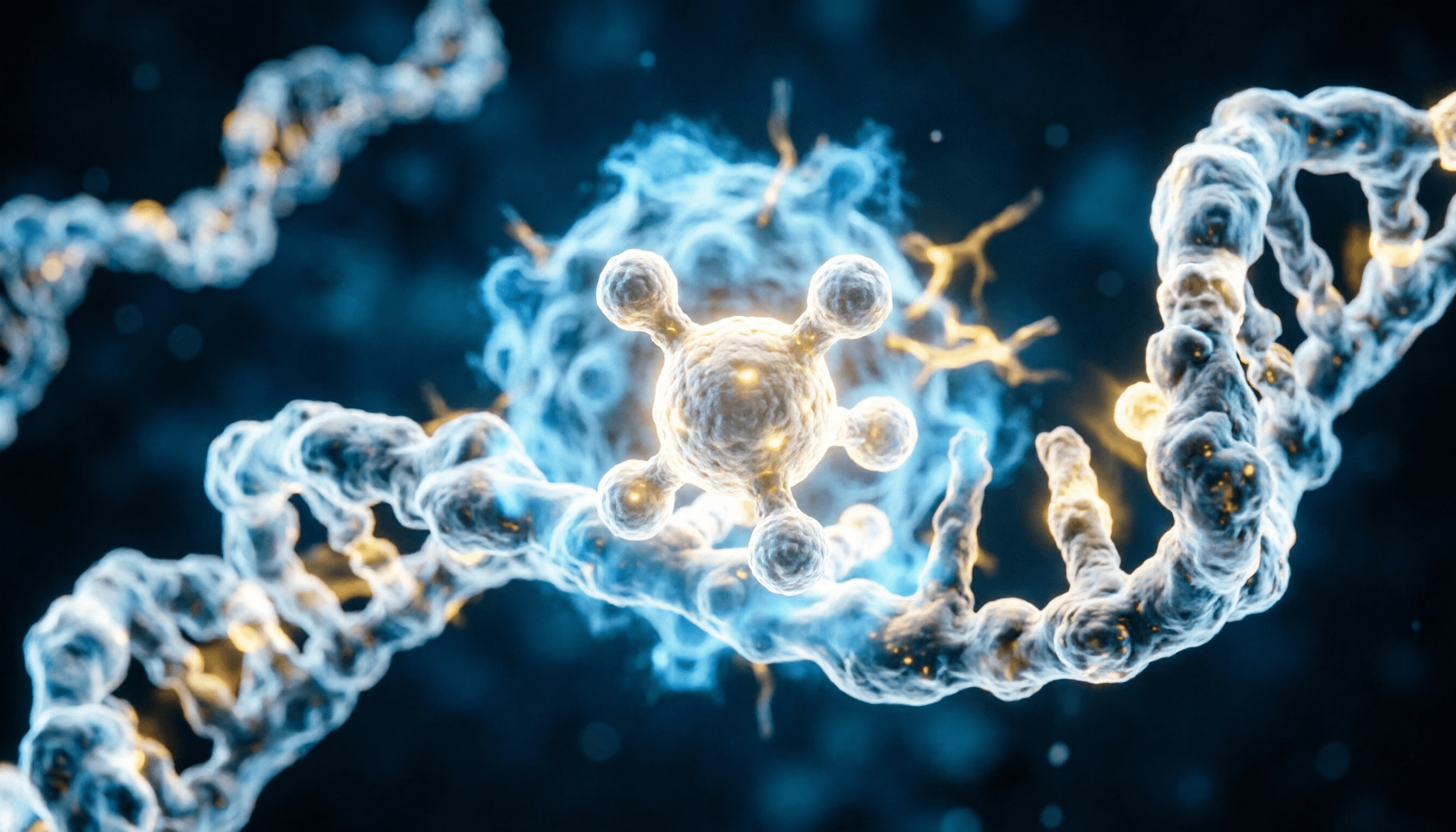
Modern longevity science has moved well beyond the idea of simply slowing decline. The most forward-thinking protocols today focus on metabolic precision — giving the body the right signal, at the right site, without unnecessary interference elsewhere. HGH Fragment 176-191 was built on exactly that principle. It takes a single, well-defined function of human growth hormone and isolates it into a 5mg peptide engineered for controlled, targeted lipolysis.
For anyone navigating recovery, cellular resilience, or long-term body composition management, the appeal of a peptide that does one thing exceptionally well — without activating anabolic pathways or disrupting hormonal balance — is immediately clear. This article explores what makes HGH Fragment 176-191 distinctive, how it fits into a broader longevity-minded approach, and why precision matters more than potency when the goal is sustainable metabolic health.
What Is HGH Fragment 176-191?
HGH Fragment 176-191 is a specific peptide sequence taken from the C-terminal end of human growth hormone — precisely amino acids 176 through 191. This region of the HGH molecule is responsible for the hormone's lipolytic activity: its ability to stimulate the breakdown of stored fat and encourage the body to use fat depots as a primary energy source.
By isolating this fragment, researchers were able to create a compound that retains the fat-metabolising signal of full growth hormone while removing its anabolic and insulin-related effects. The result is a peptide that is narrowly focused, more controllable, and far less likely to produce the off-target effects associated with exogenous HGH administration. Each vial from Olympus Meds contains 5mg of active peptide, formulated for research and investigational use.
The Science of Targeted Lipolysis
Lipolysis — the enzymatic breakdown of triglycerides stored in fat cells — is a fundamental metabolic process. In a healthy, well-functioning system, growth hormone plays a meaningful role in regulating this process, particularly during fasting, sleep, and physical exertion. As we age, GH secretion declines, and with it, the body's natural ability to mobilise fat efficiently.
HGH Fragment 176-191 directly engages the lipolytic mechanism without triggering the broader cascade that full HGH initiates. It does not bind to IGF-1 receptors, does not stimulate significant insulin resistance, and does not produce the proliferative signals associated with anabolic growth hormone activity. This makes it a uniquely clean metabolic tool — one that speaks directly to fat tissue and leaves other systems undisturbed.
Why Precision Matters in Metabolic Protocols
Broad-spectrum hormonal interventions carry inherent complexity. The more receptors a compound activates, the more variables a researcher or clinician must account for. HGH Fragment 176-191 reduces that variable load considerably. Its mechanism is well-defined, its target tissue is specific, and its profile distinguishes it from more systemically active compounds in the growth hormone family.
HGH Fragment 176-191 in a Longevity-Minded Recovery Context
The longevity community has long understood that metabolic efficiency and cellular resilience are deeply interconnected. Excess visceral fat is not merely an aesthetic concern — it is associated with chronic low-grade inflammation, impaired mitochondrial function, and accelerated biological ageing. A peptide that supports the body's ability to mobilise and oxidise stored fat contributes meaningfully to this broader picture.
HGH Fragment 176-191 fits naturally into protocols designed around body composition optimisation, metabolic recovery, and long-term physiological maintenance. Its non-anabolic nature means it can be considered in contexts where stimulating growth or tissue proliferation would be inappropriate or undesirable — making it accessible to a wider range of longevity-focused applications.
Key Characteristics at a Glance
- Targeted action: Engages the lipolytic function of HGH without activating anabolic pathways
- Non-insulin-disrupting: Does not significantly interfere with glucose metabolism or insulin sensitivity
- Composition: 5mg active peptide per vial, precision-formulated
- Mechanism: Stimulates fat cell breakdown and supports use of fat depots as an energy substrate
- Profile: Distinguished from full HGH by its narrow receptor engagement and absence of proliferative signalling
- Use-case fit: Metabolic optimisation, body composition management, longevity protocols
- Approach: Controlled, measurable, and designed for those who value precision over brute-force intervention
How HGH Fragment 176-191 Compares to Full Growth Hormone
Full exogenous HGH activates a broad array of physiological processes — stimulating IGF-1 production, promoting protein synthesis, influencing glucose metabolism, and encouraging both fat loss and tissue growth. These effects can be valuable in specific contexts, but they come with significant complexity and the need for careful management.
HGH Fragment 176-191 strips away everything except the lipolytic signal. It does not stimulate IGF-1. It does not promote anabolic tissue growth. It does not meaningfully affect blood glucose in the way full HGH can. For someone whose primary goal is improving fat metabolism and metabolic efficiency — rather than building mass or stimulating systemic growth — this distinction is not a limitation. It is the point.
Supporting the Broader Protocol: Complementary Peptides
While HGH Fragment 176-191 operates with admirable independence, it is worth understanding how it fits within a more complete longevity or recovery stack. Two peptides from the Olympus Meds catalogue are particularly relevant as contextual companions.
NAD+ supports the mitochondrial machinery that ultimately oxidises the fatty acids mobilised by lipolysis. When fat is broken down from storage, it must be efficiently burned at the cellular level — and NAD+ is central to that process. Declining NAD+ levels with age are one of the key reasons metabolic efficiency drops over time, making it a logical pairing in any longevity-focused metabolic protocol.
For those whose protocols also address recovery and tissue resilience, BPC-157 offers systemic support for soft tissue integrity, vascular health, and gastrointestinal stability — areas that underpin the body's capacity to adapt and recover during periods of metabolic change. Neither peptide overlaps with the mechanism of HGH Fragment 176-191, which is precisely why they can complement it without redundancy.
Checking Availability and Order Status
Olympus Meds maintains a transparent and updated catalogue of available peptides. Before placing an order, it is always worth reviewing the current product status page to confirm availability and stock levels for HGH Fragment 176-191 and any other compounds you are considering. This ensures your protocol planning is based on accurate, real-time information.
Where to Source HGH Fragment 176-191
For researchers, practitioners, and longevity-minded individuals seeking a reliable source of high-quality peptides, HGH Fragment 176-191 is available directly through Olympus Meds. Each 5mg vial is produced to exacting standards, with a focus on purity, consistency, and traceability — qualities that matter enormously when the compound in question is intended for precise, targeted use.
For those running multi-compound protocols or research programmes requiring larger quantities, the Olympus Meds bulk ordering page provides access to volume pricing across the full peptide catalogue. This is particularly relevant for structured longevity programmes where continuity of supply is as important as the quality of the compounds themselves.
Olympus Meds is committed to offering a premium catalogue of research-grade peptides, backed by clear product information, transparent sourcing, and a straightforward ordering experience. Whether you are beginning your first peptide protocol or refining an established longevity strategy, the platform is designed to support informed, precise decision-making at every stage.
Frequently Asked Questions
How does HGH Fragment 176-191 differ from AOD-9604?
Both peptides are derived from growth hormone and focus on fat metabolism, but they are structurally distinct compounds. AOD-9604 is a modified fragment designed to further separate lipolytic from anabolic effects, while HGH Fragment 176-191 is the direct C-terminal sequence of native HGH. Their mechanisms share conceptual similarities, but they are not interchangeable, and their specific receptor interactions differ. Researchers interested in this area should review each compound's individual profile before drawing comparisons.
Does HGH Fragment 176-191 affect muscle mass or anabolic signalling?
No — this is one of its defining characteristics. HGH Fragment 176-191 does not activate IGF-1 receptors and does not stimulate the anabolic pathways associated with full growth hormone. Its action is focused almost entirely on lipolysis. This makes it a poor choice for mass-building protocols but a compelling option for those specifically targeting fat metabolism without anabolic interference.
Is HGH Fragment 176-191 suitable for use within a broader longevity stack?
Its non-anabolic, metabolically targeted profile makes it a natural fit within longevity-focused protocols that prioritise body composition, metabolic efficiency, and cellular resilience. It does not compete with most other peptides mechanistically, which means it can be considered alongside compounds addressing energy metabolism, tissue recovery, or immune balance — provided the overall protocol is designed with appropriate care and professional guidance.