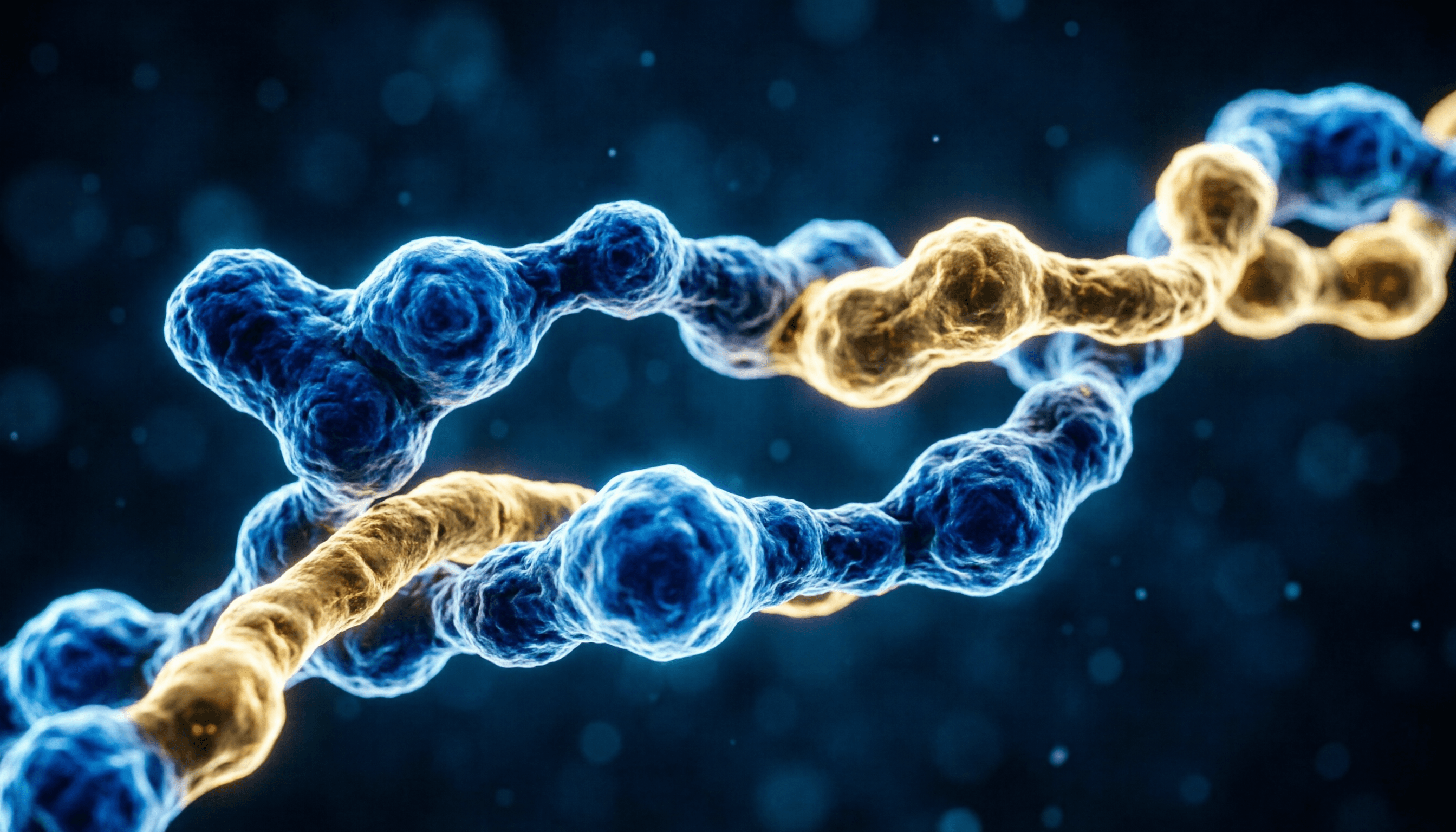
Periods of prolonged physical and psychological stress do not just drain energy — they quietly erode hormonal architecture. When the body is pushed to its limits and recovery becomes a priority rather than an afterthought, the conversation often turns to the quality of hormonal signalling at its most fundamental level. That is precisely where HMG (Human Menopausal Gonadotropin) enters the picture — a highly specialised combined gonadotropin that operates at the intersection of pituitary communication and reproductive endocrinology.
Unlike single-axis hormonal agents, HMG carries both FSH (Follicle-Stimulating Hormone) and LH (Luteinising Hormone) activity within a single compound, making it uniquely positioned for situations that demand balanced, dual-pathway regulation. At 75iu per unit, it represents a carefully measured tool — not a blunt instrument, but a precision instrument for those who understand that hormonal recovery requires nuance as much as it requires potency.
What Makes HMG Different from Other Gonadotropins
The gonadotropin family is not monolithic. Each member carries a distinct profile of receptor interaction, and the difference between them matters enormously in practice. HMG stands apart because it does not target a single hormonal axis — it works across two simultaneously. The FSH component supports follicular and spermatogenic processes, while the LH component drives steroidogenic signalling, particularly testosterone biosynthesis in males and ovarian function in females.
This dual mechanism is not a coincidence of formulation — it is the defining characteristic of HMG. In stress-heavy periods, when the hypothalamic-pituitary-gonadal (HPG) axis is suppressed or dysregulated, restoring coherent dual-pathway signalling is far more physiologically meaningful than stimulating only one arm of the system. HMG addresses both with a single, well-defined intervention.
The Physiology Behind HMG's Role in Hormonal Equilibrium
To appreciate HMG, it helps to understand what happens to the HPG axis under sustained stress. Elevated cortisol and chronic systemic load suppress GnRH pulsatility, which in turn reduces pituitary output of both FSH and LH. The downstream consequence is a measurable decline in gonadal function — reduced steroidogenesis, disrupted spermatogenesis or folliculogenesis, and a general flattening of hormonal tone.
HMG intervenes at the gonadal level, bypassing the suppressed pituitary and delivering the FSH and LH signals directly. This restores the communication loop between the pituitary and the reproductive organs, supporting the body's return toward hormonal equilibrium. It is a strategy rooted in physiological logic: when the upstream signal is impaired, provide the downstream receptor with what it needs to maintain function.
FSH Activity: The Structural Signal
The FSH component of HMG supports processes that are foundational to reproductive tissue health. In males, FSH acts on Sertoli cells to support spermatogenesis and testicular integrity. In females, it drives follicular development and oestrogen synthesis. Both are long-cycle processes that require consistent, stable signalling — exactly what HMG is designed to provide.
LH Activity: The Steroidogenic Driver
LH acts on Leydig cells in males to stimulate testosterone production — a key hormone not only for reproductive function but for muscle maintenance, energy metabolism, mood regulation, and recovery capacity. When LH signalling drops under stress, so does endogenous testosterone. HMG's LH component helps maintain this critical steroidogenic drive, supporting the hormonal environment that underpins physical and psychological resilience.
HMG in the Context of Stress-Driven Recovery Protocols
Recovery from high-stress periods is rarely a single-molecule problem. However, hormonal regulation is almost always a central pillar. When the endocrine system is restored to coherent function, every other recovery mechanism — tissue repair, metabolic efficiency, sleep architecture — tends to improve in parallel. This is why HMG occupies a strategic position in serious recovery-focused approaches.
Its value is particularly clear in scenarios where hormonal suppression has been prolonged rather than acute. Acute stress causes transient hormonal disruption; chronic stress causes structural dysregulation that requires a more deliberate, targeted response. HMG's combined FSH and LH activity addresses both the structural and steroidogenic dimensions of this dysregulation simultaneously.
How HMG Compares to HCG in Hormonal Support Strategies
A natural point of comparison is HCG (Human Chorionic Gonadotropin), which is well known for its LH-mimicking properties and its role in supporting hormonal balance through gonadal stimulation. HCG is a proven, widely researched option for maintaining hormonal tone, particularly in protocols where LH signalling is the primary concern.
Where HMG differs is in scope. HCG operates primarily through the LH receptor, offering a strong but single-axis intervention. HMG adds the FSH dimension, making it the more comprehensive choice when both axes of gonadal function need support. For protocols that require a fuller hormonal restoration — particularly where FSH-dependent processes are also compromised — HMG offers a layer of coverage that HCG alone does not provide.
Key Characteristics of HMG at a Glance
- Composition: 75iu per unit — a precisely measured combined gonadotropin dose
- Dual activity: Carries both FSH and LH biological activity in a single compound
- Target physiology: HPG axis restoration, gonadal steroidogenesis, reproductive tissue support
- Primary use-case profile: Stress-driven hormonal suppression, recovery protocols, endocrine balance strategies
- Mechanism: Acts at the gonadal receptor level, bypassing upstream pituitary suppression
- Classification: Highly specialised hormonal tool — designed for precision regulation, not broad stimulation
- Catalogue status: Available via Olympus Meds with bulk purchasing options for research continuity
Supporting the Broader Recovery Environment
HMG works most effectively when the broader physiological environment supports recovery. One peptide that complements this picture without overlapping HMG's mechanism is BPC-157, a foundational peptide known for its role in tissue repair, gastrointestinal integrity, and systemic recovery. While HMG addresses the hormonal axis, BPC-157 supports the tissue-level conditions that allow the body to capitalise on improved hormonal signalling.
These are not competing strategies — they are complementary layers. Hormonal regulation creates the internal environment; tissue-level recovery builds on it. Together, they represent a more complete approach to the kind of deep restoration that prolonged stress demands.
For those monitoring protocol status or tracking research timelines, the Olympus Meds status page provides current information on product availability and dispatch timelines.
Where to Source HMG and Plan Your Protocol
For researchers and advanced users who require consistent access to HMG across extended protocols, Olympus Meds offers a straightforward pathway. The HMG product page provides full composition details and ordering options, while the bulk purchasing page is designed for those who need reliable, uninterrupted supply across longer research timelines.
Bulk access is particularly relevant for HMG given the nature of the protocols it supports — hormonal restoration is a process measured in weeks, not days. Having sufficient supply from the outset eliminates the gaps that can compromise protocol integrity and research continuity.
HMG is not a compound for casual exploration. It is a precision instrument for those who understand the architecture of the HPG axis and approach hormonal recovery with the seriousness it deserves.
If your research or recovery strategy calls for genuine dual-axis gonadotropin support, HMG from Olympus Meds is the logical starting point. Explore the product page, review bulk options, and build your protocol on a foundation of precision.
Frequently Asked Questions About HMG
What makes HMG a combined gonadotropin rather than a single-hormone agent?
HMG contains both FSH and LH biological activity within a single preparation. This dual-action profile is what distinguishes it from agents like HCG, which primarily mimics LH. Because both FSH and LH play distinct and non-interchangeable roles in gonadal physiology, HMG's combined action makes it a more complete tool when both axes of the HPG system require support.
Why is HMG particularly relevant during or after high-stress periods?
Chronic stress suppresses GnRH pulsatility, which reduces pituitary output of both FSH and LH. This leads to measurable declines in gonadal function and steroidogenesis. HMG delivers FSH and LH activity directly at the gonadal level, restoring the signalling that stress has disrupted — making it especially well-suited to recovery protocols that follow sustained physiological or psychological load.
Is HMG available for bulk research purchasing through Olympus Meds?
Yes. Olympus Meds offers bulk purchasing options through the bulk page, which is designed to support researchers and advanced users who require consistent, uninterrupted access to compounds like HMG across longer protocol durations. Current availability and dispatch information can be checked on the status page.