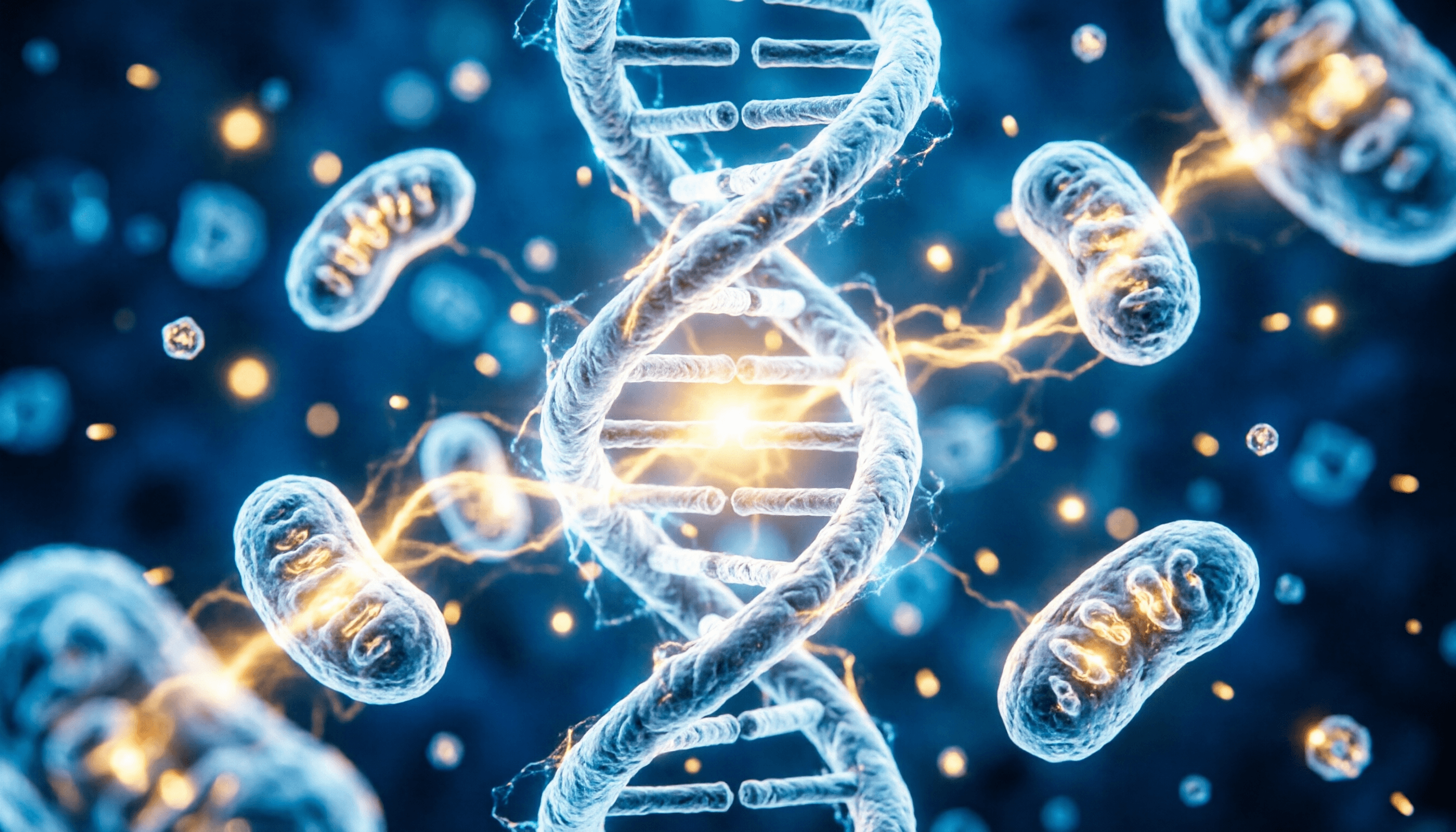
Recovery is not just a physical process — it is a cellular one. Every time a joint absorbs impact, every time soft tissue repairs itself after strain, the process depends on energy produced at the mitochondrial level. At the center of that energy exchange sits a single, irreplaceable coenzyme: NAD+. Without adequate NAD+ availability, cells cannot complete the metabolic cycles that drive regeneration, making it one of the most strategically important molecules in modern recovery science.
What makes NAD+ particularly compelling for joint comfort and soft-tissue routines is not just its role in energy production — it is its direct involvement in DNA maintenance and cellular repair signaling. As NAD+ levels naturally decline with age, the body's ability to recover efficiently also diminishes. Restoring and supporting those levels is increasingly viewed not as a luxury, but as a foundational step in any intelligent longevity or recovery strategy.
What Is NAD+ and Why Does It Matter for Recovery?
NAD+ stands for Nicotinamide Adenine Dinucleotide, a coenzyme found in every living cell. It functions as a critical electron carrier in metabolic reactions, particularly within the mitochondria — the organelles responsible for generating cellular energy in the form of ATP. Without sufficient NAD+, mitochondria cannot perform these reactions efficiently, and the entire downstream cascade of cellular repair slows considerably.
In the context of joint and soft-tissue recovery, this matters enormously. Cartilage cells, tendon fibroblasts, and synovial tissue all rely on mitochondrial function to sustain themselves and respond to damage. When NAD+ availability is compromised, these tissues are slower to adapt, slower to regenerate, and more susceptible to cumulative wear.
The Age-Related Decline of NAD+ and Its Consequences
Research consistently shows that NAD+ levels decline significantly with age — some estimates suggest a reduction of up to 50% between early adulthood and middle age. This decline is not merely a statistic; it translates directly into reduced cellular efficiency, slower tissue turnover, and diminished energy availability at the cellular level.
For individuals focused on maintaining joint comfort and soft-tissue integrity over the long term, this decline represents a meaningful physiological challenge. The mitochondria that power repair processes in tendons, ligaments, and joint-adjacent tissues become progressively less effective. Supporting NAD+ levels is therefore increasingly regarded as a core pillar in modern longevity and recovery-oriented protocols.
NAD+ and Mitochondrial Function in Soft-Tissue Repair
NAD+ plays a direct role in several enzymatic pathways critical to soft-tissue health. Its most well-understood function is as a substrate for sirtuins — a family of proteins involved in regulating cellular stress responses, inflammation modulation, and DNA repair. Sirtuin activation is closely tied to the body's ability to manage oxidative stress, which is a key driver of joint degradation and delayed soft-tissue recovery.
Additionally, NAD+ is essential for the activity of PARP enzymes, which are among the first responders to DNA strand breaks caused by mechanical stress or oxidative damage. Without adequate NAD+, these repair mechanisms are throttled, leaving tissues more vulnerable and recovery timelines extended.
How NAD+ Fits Into a Joint and Soft-Tissue Recovery Routine
A well-designed recovery routine addresses multiple layers: structural repair, inflammation management, cellular energy, and systemic resilience. NAD+ operates at the foundational layer — cellular energy — making it a logical starting point before layering in more targeted interventions.
Consider the following characteristics that make NAD+ a distinctive choice within a recovery-focused protocol:
- Mitochondrial support: Directly fuels the energy cycles required for cellular repair in tendons, cartilage, and connective tissue.
- DNA maintenance: Activates PARP and sirtuin pathways that manage oxidative damage and cellular integrity.
- Metabolic regulation: Supports efficient energy exchange across tissues, reducing the cellular energy debt that accumulates after physical stress.
- Cellular regeneration: Encourages the renewal cycles that allow soft tissues to adapt and recover rather than simply sustain damage.
- Longevity alignment: Positions recovery not as a short-term fix but as part of a sustained cellular health strategy.
- Composition: Available at Olympus Meds in a 100mg unit format, suited for precision-oriented protocols.
Pairing NAD+ With Complementary Recovery Peptides
While NAD+ addresses cellular energy and DNA-level repair, a comprehensive soft-tissue recovery approach often benefits from structural support at the tissue level. GHK-Cu is a naturally occurring copper-bound tripeptide known for its role in collagen and elastin synthesis — two structural proteins that define the resilience of tendons, ligaments, and joint-adjacent tissue. Its antioxidant and anti-inflammatory properties make it a logical complement to NAD+'s cellular energy foundation.
For those seeking broader systemic recovery support, BPC-157 offers a well-researched profile focused on soft-tissue regeneration, angiogenesis, and gastrointestinal stability. When NAD+ is establishing the cellular energy environment, BPC-157 can support the local regeneration processes in muscles, tendons, and connective tissue that benefit from that energy. Together, these peptides address recovery from multiple complementary angles without redundancy.
Understanding the Product: NAD+ at Olympus Meds
NAD+ at Olympus Meds is presented in a 100mg unit composition, reflecting a research-oriented standard of precision. The molecule itself — Nicotinamide Adenine Dinucleotide — is well characterized in scientific literature, with a growing body of evidence supporting its role in cellular energy metabolism, longevity biology, and tissue maintenance.
The formulation is designed for users who approach recovery with the same level of seriousness they bring to performance. It is not a superficial supplement — it is a coenzyme with a fundamental role in how cells generate and use energy, making it a cornerstone molecule for anyone building a serious soft-tissue or joint recovery protocol.
For researchers and practitioners interested in institutional or volume-based access, the Olympus Meds bulk program provides structured options. You can also review the current availability and status of all products through the product status page.
Who Should Consider NAD+ in Their Recovery Protocol?
NAD+ is not category-specific — its relevance spans a wide range of recovery-oriented users. Those managing age-related joint discomfort will find it addresses a root cause rather than a surface symptom. Athletes and active individuals dealing with cumulative soft-tissue stress will benefit from the mitochondrial efficiency it supports. And those taking a proactive longevity approach will recognize NAD+ as one of the most evidence-aligned molecules available for cellular maintenance.
What distinguishes NAD+ from many recovery-adjacent products is that its mechanism is not speculative — it is embedded in fundamental biochemistry. The question is not whether it plays a role in recovery; it is whether your protocol is supporting its availability at the cellular level.
Where to Start With NAD+ at Olympus Meds
If you are building or refining a joint comfort and soft-tissue recovery routine, NAD+ deserves a central position in that strategy. Its role in cellular energy, DNA repair, and mitochondrial function makes it the foundation upon which more targeted recovery tools can be layered effectively.
Explore the full NAD+ product page at Olympus Meds to review composition details and availability. For those considering multi-product or research-volume needs, the Olympus Meds bulk program is the appropriate next step. At Olympus Meds, every product in the catalog is selected for scientific credibility and formulation integrity — because recovery at the cellular level deserves nothing less.
Frequently Asked Questions
What makes NAD+ relevant specifically for joint and soft-tissue recovery?
NAD+ is the coenzyme that powers mitochondrial energy production in every cell, including those in cartilage, tendons, and connective tissue. When cellular energy is insufficient, repair processes slow down. By supporting NAD+ availability, you are addressing recovery at its most fundamental level — the cell's ability to generate the energy needed to rebuild and adapt.
Can NAD+ be used alongside other peptides in a recovery protocol?
Yes. NAD+ operates at the cellular energy layer, which is distinct from the structural repair mechanisms targeted by peptides like GHK-Cu or BPC-157. This means it can be incorporated into broader protocols without functional overlap, and may in fact enhance the efficiency of other recovery-oriented peptides by ensuring the cellular environment has adequate energy resources.
How does NAD+ decline with age affect recovery timelines?
As NAD+ levels fall with age, mitochondrial efficiency decreases and DNA repair mechanisms become less responsive. This contributes to slower tissue turnover, reduced resilience in joint-adjacent structures, and a general lengthening of recovery timelines. Supporting NAD+ levels is therefore not just a performance consideration — it is a fundamental aspect of maintaining tissue quality and recovery capacity over time.